Spiritual Travel
Why Uttarakhand Is Called Devbhoomi?
September 30, 2026
September 30, 2026
Uttarakhand is often called Devbhoomi, which means “Land of the Gods.” The name is closely connected with the state’s ancient temples, sacred rivers, pilgrimage traditions, Himalayan landscape, and stories found in Hindu religious traditions. But why is Uttarakhand called Devbhoomi? The answer is much deeper than the presence of a few famous temples.
From Kedarnath and Badrinath to Gangotri, Yamunotri, Haridwar, Rishikesh, and the sacred sites of Kumaon, spirituality is woven into everyday life here. For travellers, this makes Uttarakhand more than a hill destination. It is a place where a holiday can also become a journey through India’s religious and cultural heritage.
“Devbhoomi” literally means “Land of the Gods.” Uttarakhand has carried this identity for centuries because of its strong association with Hindu pilgrimage, mythology, sages, temples, rivers, and sacred Himalayan landscapes.
The state has two historic cultural regions, Garhwal and Kumaon. Ancient traditions associate Garhwal with Kedar Khand and Kumaon with Manas Khand. Across both regions, visitors find old temples, local deities, pilgrimage routes, river confluences, and places connected with stories from Hindu scriptures.
So, the name Devbhoomi does not refer to one particular location. It describes the wider spiritual character of Uttarakhand.
One of the strongest reasons Uttarakhand is known as Devbhoomi is the presence of the Char Dham of Uttarakhand: Yamunotri, Gangotri, Kedarnath, and Badrinath.
Yamunotri is dedicated to Goddess Yamuna, while Gangotri is associated with Goddess Ganga. Kedarnath is a major shrine of Lord Shiva and is also one of the twelve Jyotirlingas. Badrinath is dedicated to Lord Vishnu in his Badrinarayan form.
These four Himalayan shrines form the famous Chota Char Dham pilgrimage circuit. Every year, pilgrims travel through challenging mountain terrain to visit these temples. The journey itself is an important part of the experience, combining devotion, nature, and traditional pilgrimage.
The Char Dham circuit also explains why the phrase “Devbhoomi Uttarakhand” is so closely connected with religious travel.
Kedarnath holds a special place in Uttarakhand’s spiritual identity. Located high in the Garhwal Himalayas, the temple is dedicated to Lord Shiva and is part of both the Char Dham and Panch Kedar traditions.
According to popular Hindu tradition, the Pandavas sought Lord Shiva after the Mahabharata war. Shiva is said to have taken the form of a bull and attempted to avoid them. When the Pandavas recognised him, he disappeared into the ground, and different parts of his form are believed to have appeared at several places in the Himalayas.
Kedarnath is associated with the hump, while the other manifestations are linked with Tungnath, Rudranath, Madhmaheshwar, and Kalpeshwar. These five temples together form Panch Kedar.
Whether experienced as faith, tradition, or cultural heritage, these stories are an important part of understanding why Uttarakhand is considered sacred.
Uttarakhand is not only known for temples. Its rivers are equally important to its identity.
The Ganga and Yamuna are among India’s most revered rivers, and their Himalayan origins are closely associated with Uttarakhand. Gangotri and Yamunotri attract pilgrims who come to worship the rivers and visit their associated shrines.
The state is also home to Panch Prayag, five important river confluences: Vishnuprayag, Nandprayag, Karnaprayag, Rudraprayag, and Devprayag. Devprayag is especially significant because the Bhagirathi and Alaknanda meet there and continue as the Ganga.
This connection between mountains, rivers, and worship is one of the clearest reasons the region has such a strong spiritual character.
The spiritual story of Uttarakhand extends well beyond Char Dham. Panch Kedar is a group of five revered Shiva temples: Kedarnath, Madhmaheshwar, Tungnath, Rudranath, and Kalpeshwar.
There are also important Vishnu temples associated with the Panch Badri tradition. In Kumaon, places such as Jageshwar add another layer to Uttarakhand’s temple heritage. Haridwar and Rishikesh are major spiritual centres on the Ganga, while many smaller village shrines preserve local traditions that visitors may not find in mainstream travel guides.
These places show why Devbhoomi cannot be understood through only four famous temples. Uttarakhand’s spiritual identity comes from a wider living tradition of pilgrimage, worship, folklore, and sacred geography.
There is another reason the name Devbhoomi feels natural to many visitors: the landscape itself has always been closely connected with spirituality.
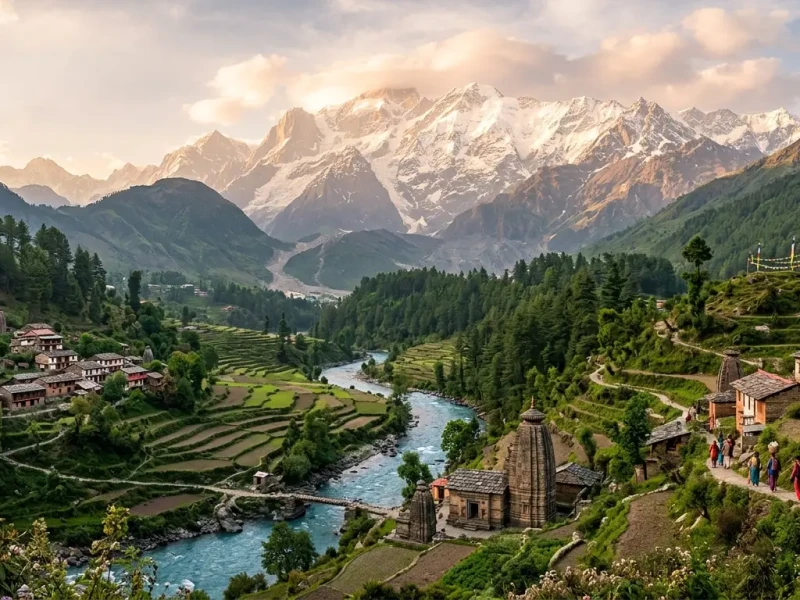
Snow-covered peaks, forests, valleys, rivers, caves, meadows, and remote mountain villages create the setting for many pilgrimage routes and meditation traditions. The Himalayas have long attracted sages, pilgrims, spiritual seekers, and travellers looking for quiet places away from crowded cities.
That does not mean every mountain or natural feature is officially a religious site. Rather, nature and spirituality have developed alongside each other in Uttarakhand, creating a distinctive cultural landscape.
No. Calling Uttarakhand Devbhoomi does not mean the state is only for pilgrims.
Uttarakhand also attracts travellers for trekking, wildlife, adventure activities, yoga, wellness, camping, nature trips, family holidays, and scenic mountain escapes. Rishikesh, Auli, Mussoorie, Nainital, Jim Corbett, Chopta, and many other destinations appeal to different types of travellers.
This combination is one of the state’s biggest attractions. A traveller can visit a temple in the morning, explore a Himalayan town in the afternoon, and spend the evening beside a river or in a peaceful mountain village.
If your main purpose is pilgrimage, you can plan a Char Dham, Kedarnath, Badrinath, or other temple-focused journey. If you want a broader holiday, combine spiritual destinations with sightseeing, nature, and local experiences.
For first-time visitors, planning matters because Himalayan travel involves changing weather, mountain roads, seasonal temple openings, and different travel times between destinations. A well-planned itinerary can make the journey more comfortable and help you use your time wisely.
Travellers looking for customised Uttarakhand tour packages can explore Vcationswale, where trips can be planned around destinations, travel dates, group size, and preferred experiences. This is useful for families, couples, groups, and travellers who want a more organised Uttarakhand holiday rather than arranging every part of the journey themselves.
Uttarakhand is called Devbhoomi because its identity has been shaped by sacred temples, revered rivers, Himalayan pilgrimage routes, ancient traditions, and stories associated with gods, sages, and epics.
The Char Dham, Panch Kedar, Panch Prayag, Haridwar, Rishikesh, and numerous regional temples show that this spiritual heritage is spread across the state rather than concentrated in one place.
At the same time, Uttarakhand is much more than a pilgrimage destination. Its mountains, forests, rivers, wildlife, adventure opportunities, and peaceful towns make it a complete travel destination.
That is what makes a journey through Devbhoomi special: you are not simply visiting a collection of temples. You are travelling through a landscape where nature, culture, faith, and Himalayan life have been connected for generations.
For travellers planning a trip, this also means there is no single way to experience Devbhoomi. You can choose pilgrimage, culture, nature, adventure, or a carefully balanced itinerary based on your interests.
The tradition remains visible in villages, festivals, rituals, and local customs.