Travel
What Is the Difference Between FIT and GIT in Tourism?
September 14, 2026
September 14, 2026
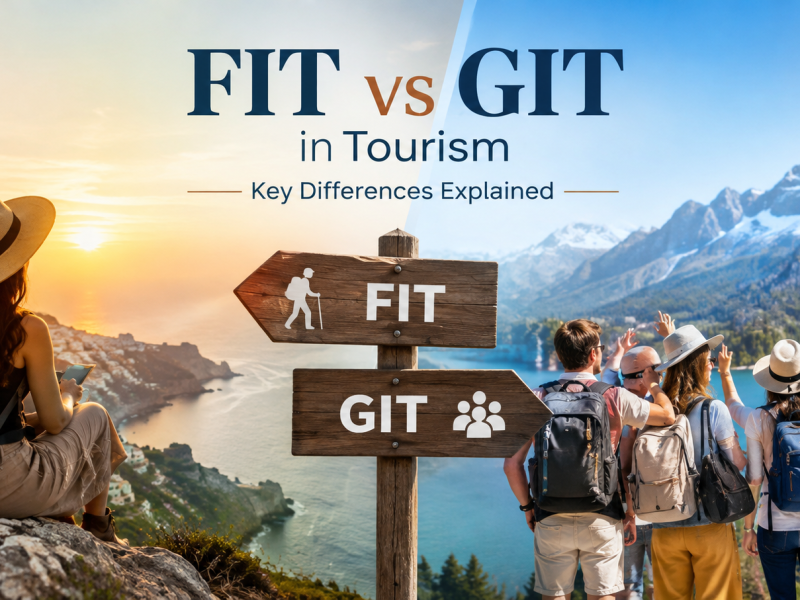
When planning a holiday, you may come across terms such as FIT and GIT. These are commonly used in the travel industry to describe two very different ways of travelling. While one gives you greater freedom to plan your journey your way, the other offers the convenience of travelling on a pre-arranged itinerary with a group.
Understanding the difference between FIT and GIT in tourism can help you choose the right type of travel package based on your budget, travel style, group size, and expectations.
FIT stands for Free Independent Traveller. In tourism, an FIT traveller usually travels alone, with a partner, family, or a small private group.
The biggest advantage of FIT travel is flexibility. Instead of following a fixed itinerary with a large group, the trip can be designed according to the traveller's preferred dates, destinations, hotels, sightseeing choices, and pace.
For example, imagine a couple planning a trip to Dubai. They may want to spend an extra day shopping, choose a particular hotel, or skip an attraction that does not interest them. An FIT package allows them to build the itinerary around those preferences.
FIT does not always mean that travellers have to plan everything themselves. A travel company can create a customised package and arrange hotels, transfers, sightseeing, and other services while keeping the journey private and personalised. Tourism learning material describes FIT arrangements as customised tours designed to suit the traveller's requirements.
GIT stands for Group Inclusive Tour. In this type of travel, a number of travellers follow the same pre-planned itinerary and usually share transportation, sightseeing arrangements, and other tour services.
A GIT package generally has fixed departure dates, selected hotels, planned sightseeing, and a structured travel schedule. Instead of making separate arrangements, travellers join an organised group and follow the tour programme.
For instance, if a traveller books a Europe group tour departing on a particular date, they may travel with other tourists on the same coach, visit the same attractions, and follow the same daily schedule.
Because hotels, transport, and other services can be arranged for multiple travellers together, group tours can often offer better per-person value. The trade-off is that travellers have less control over changes to the itinerary. GIT is commonly described in tourism education as travel undertaken in the company of other tourists as part of an organised group.
The main difference between FIT and GIT is the level of independence and customisation.
FIT offers:
Flexible travel dates
Personalised itineraries
Private transfers or preferred transport
Freedom to choose hotels and experiences
More privacy and control over the trip
GIT offers:
A pre-planned itinerary
Fixed departure dates
Group transportation and sightseeing
Shared travel experiences
Easier planning and often better value through group arrangements
In simple terms, FIT is about travelling your way, while GIT is about travelling together on a planned schedule.
There is no single answer because the final price depends on the destination, travel season, hotel category, transport, and services included.
However, FIT travel can cost more per person when private transfers, customised arrangements, or premium hotels are selected. GIT packages may offer lower per-person costs because certain travel services are arranged for a larger group.
That does not mean GIT is always cheaper or FIT is always expensive. A well-planned customised trip can also fit a specific budget. The important point is to compare the actual inclusions rather than looking only at the starting price.
FIT is usually a good choice for couples, honeymooners, families, luxury travellers, and people who want a more personalised holiday.
Choose FIT if you want to decide where you stay, how long you spend at each destination, and which experiences are included in your trip.
It is particularly useful when your travel dates are fixed but do not match the departure dates of a group tour.
GIT can be suitable for travellers who prefer a structured and organised journey. It is often chosen by larger groups, first-time international travellers, student groups, corporate groups, and travellers who enjoy meeting new people.
With most arrangements planned in advance, travellers can avoid handling multiple bookings and daily logistics on their own.
Neither is automatically better. The right choice depends on how you want to travel.
If flexibility, privacy, and a personalised experience matter most to you, FIT may be the better option. If you prefer a planned schedule, group experience, and the convenience of having arrangements organised in advance, GIT may suit you better.
Before booking, consider your budget, number of travellers, preferred travel dates, destination, and how much flexibility you actually need.
Choosing between FIT and GIT becomes easier when your travel requirements are understood properly. Vcationswale helps travellers explore travel options based on their destination, budget, group size, and preferred travel style.
Whether you are planning a customised private holiday for your family or looking for an organised group experience, the right package should match the way you want to travel—not simply offer the lowest price.
A well-planned trip gives you clarity about what is included, how the itinerary will work, and whether FIT or GIT is the better choice for your journey.
The difference between FIT and GIT in tourism comes down to flexibility versus structure. FIT gives travellers more freedom to personalise their journey, while GIT provides the convenience of travelling on an organised group itinerary.
Before choosing either option, think about the kind of experience you want. A traveller looking for privacy and flexibility may prefer FIT, while someone who values convenience and group travel may find GIT more suitable.
The best holiday is not defined by whether it is FIT or GIT. It is defined by whether the travel plan actually fits your needs.