Travel Destinations
Some Interesting Facts About Sri Lanka You Should Know
September 25, 2026
September 25, 2026
Sri Lanka is a small island with an unusually rich mix of history, nature, culture and coastal life. Located in the Indian Ocean, just south of India, the country offers ancient cities, misty tea hills, wildlife parks, tropical beaches and distinctive food within a relatively compact area. That variety makes Sri Lanka interesting not only for first-time visitors but also for travellers looking beyond the usual beach holiday.
If you are planning a Sri Lanka trip, these interesting facts about Sri Lanka will help you understand what makes the island different and why it continues to attract travellers from around the world.
One of the most surprising Sri Lanka facts is that the country has two important capitals. Sri Jayawardenepura Kotte is the administrative and legislative capital, while Colombo is the largest city and the country's commercial centre. Many travellers simply call Colombo the capital, but the official distinction is worth knowing.
Sri Lanka was formerly known internationally as Ceylon. The older name is still closely associated with Ceylon Tea, one of the country's most recognisable products. The name Sri Lanka became official in 1972.
For an island of about 65,610 square kilometres, Sri Lanka has an impressive concentration of heritage. UNESCO lists eight World Heritage properties, including the Ancient City of Sigiriya, the Old Town of Galle and its Fortifications, the Sacred City of Kandy, Anuradhapura, Dambulla, the Central Highlands and Sinharaja Forest Reserve.
This is one reason Sri Lanka holidays can offer much more than sightseeing on the coast. History lovers can move from ancient Buddhist cities to colonial architecture and protected natural landscapes without leaving the island.
Sigiriya, often called Lion Rock, is one of the most famous places to visit in Sri Lanka. The ancient site rises dramatically above the surrounding forest and contains the remains of a royal capital built during the reign of King Kassapa I in the fifth century.
The site is especially remarkable for its water gardens, defensive structures, frescoes and sophisticated planning. The climb is part of the experience, but the history behind the rock is what makes Sigiriya memorable.
Sri Lanka may be small, but its wildlife is not. The country has protected national parks where visitors can see elephants, leopards, sloth bears, deer and many bird species. Yala National Park is particularly known for its leopard population.
The island also has important marine wildlife. Whales, including blue whales, can be seen in Sri Lankan waters, making the country interesting for travellers who want to combine a safari with a coastal or marine experience.
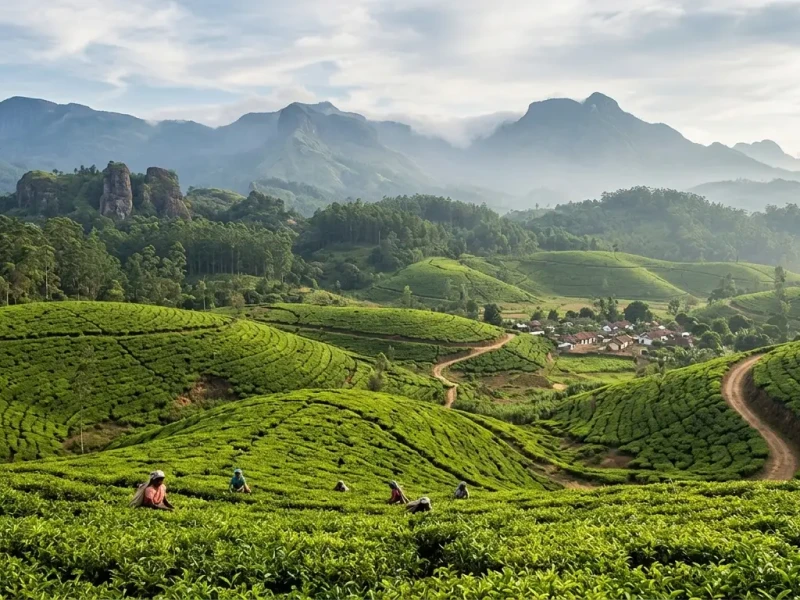
Sri Lanka is famous for Ceylon tea, and the central highlands are where travellers can see tea plantations covering green mountain slopes. Places around Nuwara Eliya and Ella are popular for scenic landscapes, cooler weather and tea-estate experiences.
A visit to the hill country can therefore feel very different from a beach stay. Travellers can walk through plantations, visit tea factories and enjoy views shaped by generations of tea cultivation.
The island's coastline is not simply one long beach destination. Different coastal areas offer different experiences. The south coast is known for beaches, surfing and historic Galle, while the east coast includes destinations such as Arugam Bay and Trincomalee.
Season also matters. Weather patterns vary across the island, so choosing the right coast for the time of year can make a Sri Lanka tour much more enjoyable.
Buddhism has played a major role in Sri Lanka's history and culture for centuries. Sacred cities such as Anuradhapura and Kandy contain important religious sites, while temples and monasteries can be found throughout the country.
The Temple of the Sacred Tooth Relic in Kandy is one of the best-known religious attractions. Visitors should remember that temples are places of worship, so modest clothing and respectful behaviour are important.
Sri Lankan cuisine is another reason to explore beyond the standard tourist route. Rice and curry, hoppers, kottu, sambols and seafood are common parts of local food culture. Spices, coconut and fresh ingredients give many dishes a flavour that is different from neighbouring cuisines.
For travellers, trying local food can be one of the simplest ways to experience everyday Sri Lankan culture.
Sri Lanka has a long history of gemstone mining and trading. The country is particularly associated with sapphires, including the famous blue sapphire. Ratnapura is widely known as the centre of Sri Lanka's gem industry.
This connection between natural resources and traditional craftsmanship adds another layer to the island's travel story.
A major advantage of travelling in Sri Lanka is the variety packed into a relatively small country. You can start near the coast, travel into the green hills, visit an ancient city and finish with a wildlife experience.
The official Sri Lanka tourism information highlights beaches, waterfalls, tea country, viewpoints, heritage sites, wildlife and adventure as key parts of the island. For travellers with limited time, this variety makes route planning especially important.
Sri Lanka is known for scenic rail journeys through the hill country. The train routes around Kandy, Nuwara Eliya and Ella are popular because they pass through mountains, tea plantations, villages and forested landscapes.
The journey itself becomes part of the experience rather than simply a way to reach the next destination.
The most interesting thing about Sri Lanka is not one landmark or attraction. It is the contrast between experiences. A single itinerary can combine heritage, wildlife, beaches, food, tea estates and local culture.
However, trying to cover everything in one trip can make the journey rushed. A better approach is to choose destinations according to your travel dates, interests and preferred pace. A well-planned Sri Lanka tour package can make it easier to combine the right places while keeping transfers and sightseeing practical.
If you are looking for Sri Lanka tour packages from India, Vcationswale can help you plan a trip around the experiences that matter most to you. Whether you want a relaxed beach holiday, a family trip, a cultural itinerary, a scenic hill-country journey or a mix of sightseeing and adventure, the itinerary can be planned around your requirements.
Instead of choosing destinations randomly, discuss your travel dates, budget and preferred experiences before finalising the route. This can help you make better use of your holiday and avoid spending too much time travelling between places.
Explore Sri Lanka with Vcationswale and plan a trip that brings together the island's heritage, landscapes, wildlife and coastal experiences in one practical itinerary with the right travel plan.